
Part 2 of AtoMix multi-channel studio with PMC speakers: Will immersive sound take over the music market?

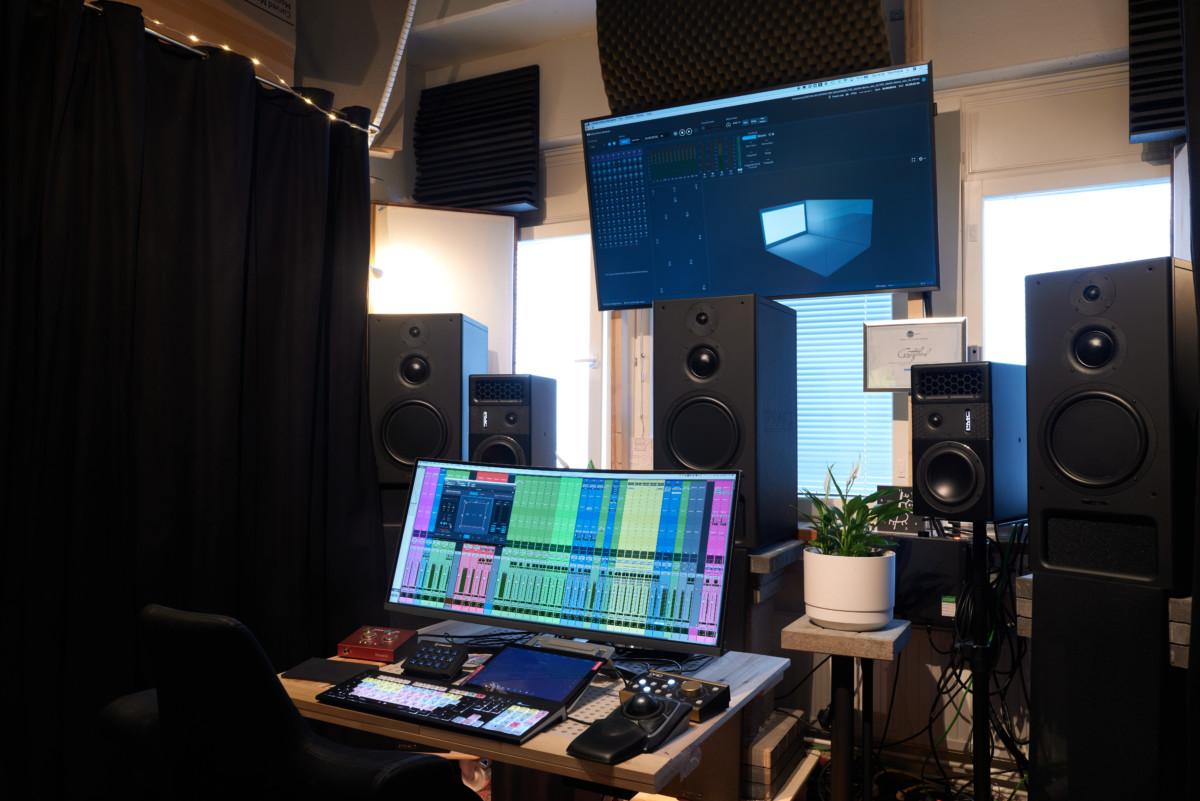
Stereo has dominated music production for half a century, and multichannel audio hasn’t really taken off on a large scale. Now, however, that may be changing.
This is the second part of the interview with sound engineer Tomi Pietilä, which we visited at the AtoMix studio in Herttoniemi, Helsinki. An insight into PMC studio monitors and their significance for the recording engineer can be found here. read here.
This time, we continue to delve deeper into the world of immersive spatial sound by exploring the current state of Atmos music.

In Tomi Pietilä's AtoMix studio in Herttoniemi, Helsinki, various surround mixes are being produced.
The first format in terms of airtime?
The music industry is in a state of upheaval in many ways. Streaming has revolutionized the revenue model of the music industry, and now changes are also taking place in audio formats, which reflects not only on consumers but also on the creators. Pietilä highlights the current change in this regard.
– Now practically everyone knows what Dolby Atmos is. At least they’ve heard the term. It’s another matter whether everyone knows what it means, but now there’s a huge demand. The creators really have to take it on board.
An increasingly significant proportion of music is now listened to through music streaming services, and many streaming services now offer on-demand audio. Almost all recorded music to date has been primarily made for one or two speakers. Old album classics have now begun to be released again in a streaming version. Pietilä sees the change as welcome.
– For new producers, this is an insanely great opportunity. I myself struggled with 5.1 and 7.1 for ten years. In my opinion, that was the greatest thing ever, but no one seemed to realize it.
While more traditional surround mixing requires speakers, Atmos production is nowadays possible to handle with ordinary headphones, using virtual surround sound. For example, in the Logic Pro X audio program it is achieved natively, and with Apple’s own headphones it is also supported with head tracking.
Of course, virtual space does not replicate listening with real speakers, but in practice, Atmos mixing is possible for almost anyone, even in the corner of a bedroom, and anyone can publish content encoded in Dolby Atmos on a streaming service.
– Youth go right and left by. And this can be a big fear for those in the industry. When you have spent decades learning to do stereo mixing, in practice, you have to throw those things aside now. This is such a different world.
But what about stereo material? Will it gradually fade away? Hardly, but it will emerge if necessary on the side of the surround sound mix. In the eyes of the publishers, surround sound may gradually be becoming the number one product.
– With the current tools, the immersive world blends into the stereo practically automatically. Once you just understand what you’re doing.
For Pietilä, the situation is advantageous in that he has been focusing specifically on spatial sound for 15 years already.
– Everything I’ve done has been done in many ways, and stereo has come into its own. This is the same continuum, but the tools have just evolved.
Headphones as a throw-away product
Just as mixing immersive music is possible with headphones and at home, so is listening to it. Few people even realize how easily immersive music is available.
A lot happened in 2021. Apple made Spatial Audio available in its Music streaming service at no additional cost. This was a big change, as it is the second largest streaming service after Spotify. At Tidal, Atmos listening requires a more expensive Hi-Fi Plus subscription. At Deezer, more expensive subscriptions offer versions of songs in the Sony-based 360 Reality Audio format.
The most notable competitor to Dolby Atmos is DTS:X. The third but rarer format is Auro-3D. What they all have in common is that they offer three-dimensional sound, but only Dolby currently enables object-based sound in addition to the traditional channel-based one.
– DTS is still focused on reproducing sound through headphones. It includes information about how to mix it down to smaller speaker sizes (11.1–7.1–5.1–2.0), but it doesn’t allow you to use objects. For this reason, I think Dolby is more versatile, but you can, for example, put all different formats on a Bluray disc. Thanks to the objects, Dolby is able to create a better binaural headphone version. When I play back audio through headphones, I tell it how the objects should be positioned in the sound field when listened to with headphones. Moreover, Sony has immersive 360 Reality Audio, which is supported by, among other things, Sony’s popular noise-cancelling headphones. The music in this format can be found, for example, on Tidal, Deezer, and Amazon’s streaming service. It is intended specifically for headphones. Amazon Music Unlimited also has Atmos and 360 Reality Audio music. Currently, there is no information about the market leader Spotify’s schedule regarding immersive audio.
– The binaural headphone side, as far as I understand, is the one where immersive audio will be sold to everyone. Or that which is already being sold.
Atmos enables binaural mixing. In practice, this means that in the case of headphone listening, the human ear is better able to take into account how humans hear sound. Humans have two ears, with the bones between them. Sound waves coming directly from the front reach the ears at essentially the same time. Sound waves arriving from the side reach them at different times and with different intensities. And, unlike in traditional headphone mixing, for example, both stereo channels reach both ears. This creates the illusion of space and distance.
When listening to traditional stereo mixing, the sound intended to come from the front often ends up being located in the center or back of the head. Nowadays, binaural audio can be digitally produced using algorithms. What makes binaural audio special is that to listen to it, basically nothing else is needed than ordinary headphones.
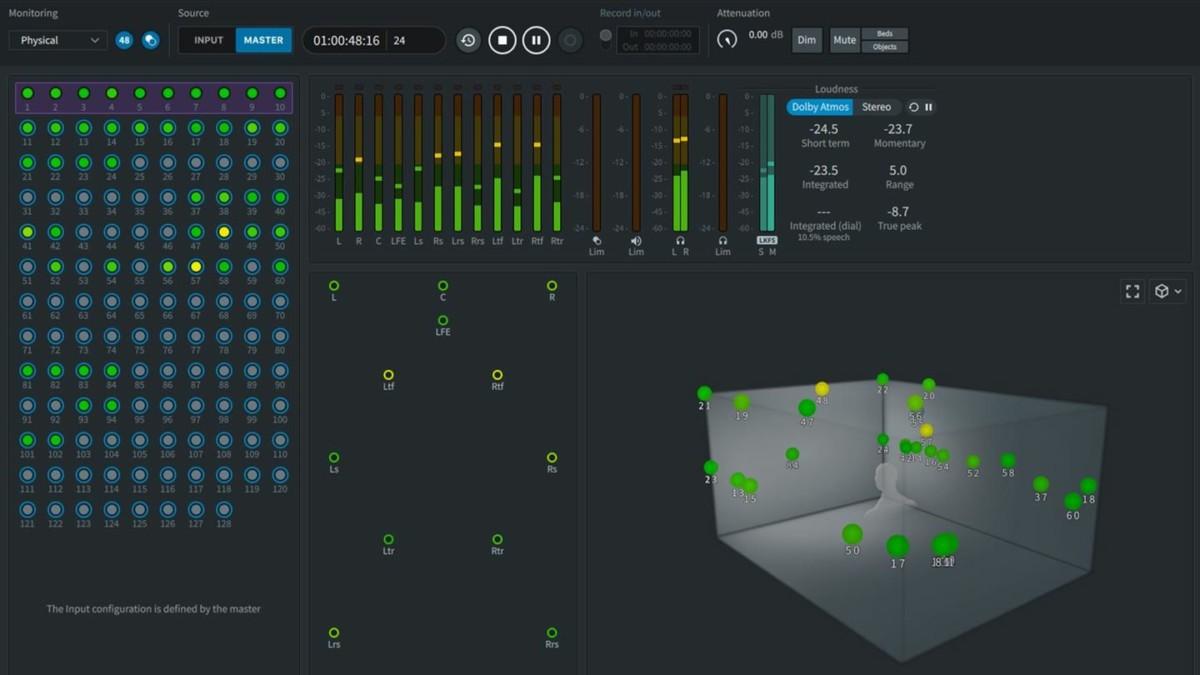
Dolby Atmos audio is based on freely positioned audio objects, rather than the more traditional channel-based implementation. It literally gives the audio room for maneuver in all directions. (Image: Dolby)
What kind of situation is the situation in the room?
Often, especially when it comes to band music, it is thought that the sound should correspond to the way the instruments are arranged, largely influencing the impression one gets when standing in a concert watching the band. The bass drum is usually in the center, the guitars often a little to the side, and so on. According to Pietilä, this would be anything but natural and enjoyable.
– In a way, mixing has nothing to do with naturalness. How each person experiences it, when a sound is natural, varies greatly. For me, this whole sound thing represents a kind of storytelling – the kind of feeling it creates.
It’s therefore a matter of interpretation. How do you preserve the original sound and atmosphere, but bring it into a three-dimensional environment? There are no written rules in that, even if there are some on the stereo side.
We listened to the Anssi Tikka-produced album Maisemakuvia Suomesta (Scenes of Finland) on the Dolby Atmos Music certified speaker system from the AtoMix studio, and the spatial version of the album was being recorded at the time of the interview in Pietilä. For example, the violin is placed in the ceiling speaker, which feels like a very natural solution.
The example of a landscape photograph is also incidentally revealing. Is a rock club the most natural environment to place songs like ”Lapin tunturit”, ”Aamu lake shore”, ”Savolainen metsä” or ”Tuusulan moottoritie”?
So far, only a small part of the Atmos content has been produced in Finland. Pietilä produced a record in 2021 after the death of his late friend Esa Kaartamo. Kaartamo had recorded 16 demo tracks between 2010 and 2011. He died in 2018, and they were not released during his lifetime.
– Great songs, and the family wanted the songs that were left out to be made into a completely male and guitar-based release. At some point I got the idea that since Esan’s tempo, energy, and everything else have always been really good, maybe I could play some more of it. I got Esan’s friends involved and produced a version where they played more of Esan while following his lead.
This is one of the few Atmos-mixed records in Finland so far, but at the time of the interview, Pietilä had two projects underway and one was still awaiting approval before release.
We listened to a fresh version of Miles Davis’s classic album of modal jazz, Kind of Blue. It is performed in an interesting way. While the original recording had only three tracks, they were re-recorded in the loudspeakers at Capitol Studios and the material recorded from the loudspeakers was recorded in the recording studio. The effect is extremely natural and natural. A similar version has also been made of Miles Davis’s album Sketches of Spain.
A similar process is currently used extensively when recording an electric guitar. A direct signal from the guitar is recorded onto a computer, after which the sound is sent to an amplifier, from which the resulting audio is recorded on a microphone. A complete guitar track can be played in complete silence, even in the corner of a bedroom. On the other hand, when seeking the sounds of the amplifier, there is no need to record additional takes independent of the original recording.
In addition to the re-releases, the music is also played out in Dolby Atmos in some cases. The Norwegian record label 2L is focused on multichannel music for a long time now. The recordings featuring mainly classical music have microphones placed in the middle of the musicians. One could therefore say that the listener gets to the position of the conductor.
– In practice, we have a situation where the “what the microphones hear” type of thing is offered.
In addition, 2L has also invested in the space where the music is stored. They have been recorded, for example, in small churches. The record company has received several Grammy nominations and awards for its releases.
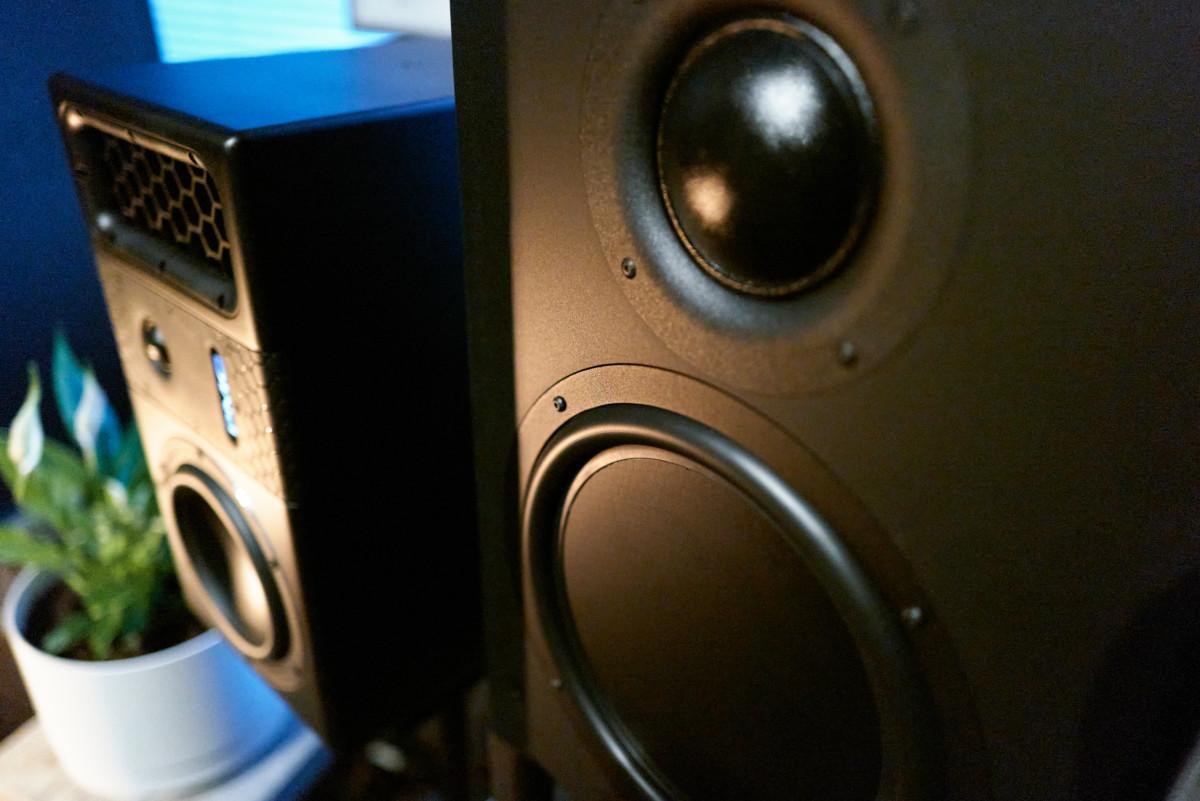
Tomi Pietilä's studio is equipped with PMC monitor speakers. (Photo: Henkka Niemistö)
Quadraphonic sound
The first surround sound format designed for consumers was quadrophonic (quadrofonic) sound. It had four speakers, and the listener sat in the center of a rectangular square. The first devices came onto the market in the late 1960s and 1970s.
The problem for the establishment of the four-channel sound was that there were several competing formats on the market that were not compatible with each other. There were also problems with reliability.
The best-known quadrophonic recording is probably Pink Floyd's Dark Side of the Moon. The band had used four-channel audio in live performances. It was released in four-channel stereo as a 8-track tape, and as a rare LP in Japan, suitable for the Sansui quadrophonic RM system.
The idea of using a surround sound system for music playback was originally conceived in the 1990s. As home theaters became more common in the 2000s, they were primarily designed for movie purposes. However, studio albums have also been released in a surround sound format, for example, Dark Side of the Moon was released in 5.1 channel format.
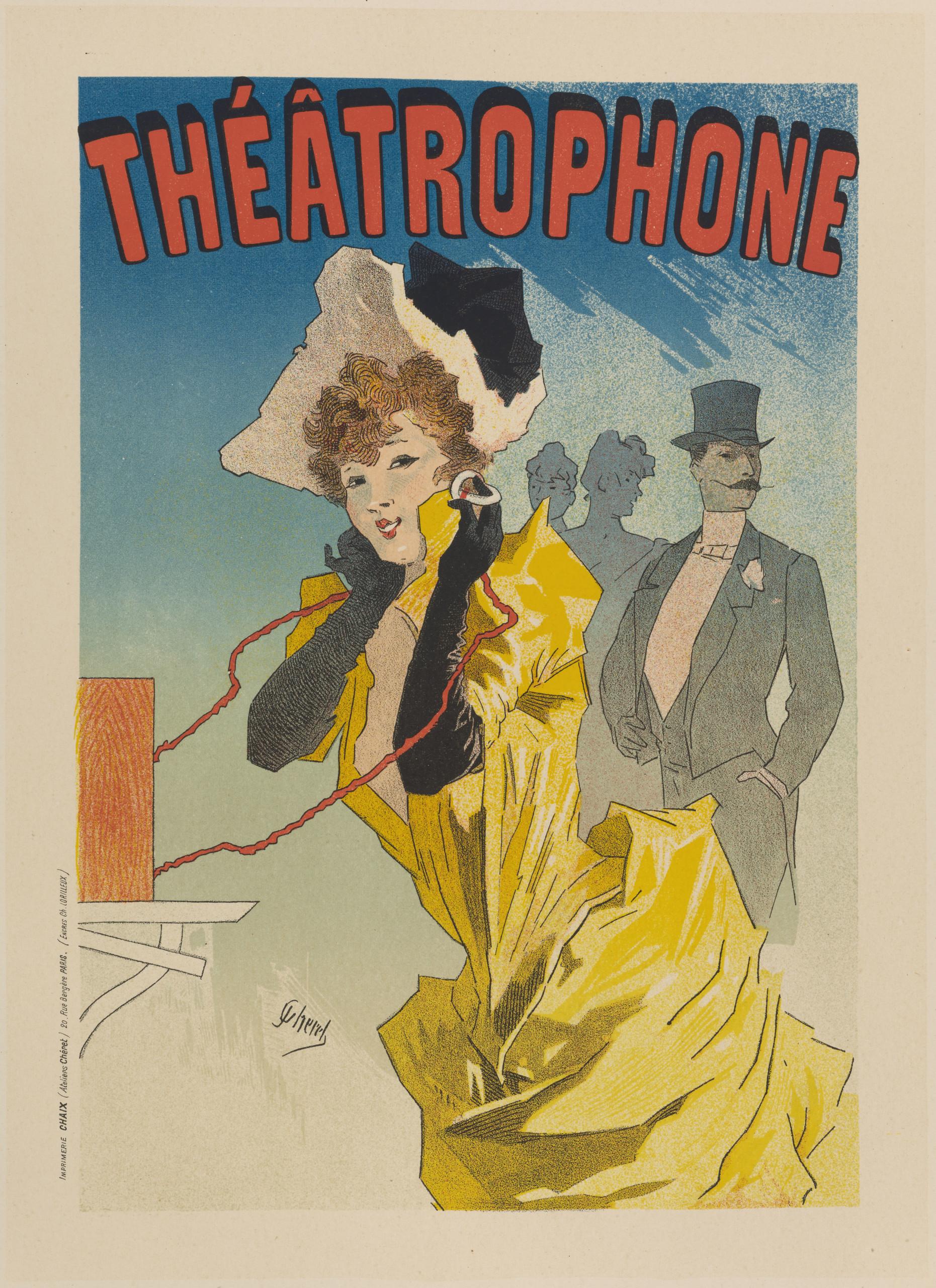
The Théâtrophone advertisement from 1896, with the hand of Jules Chéret. (Photo: Public Domain/Wikimedia Commons)
Theâatrophone – binaural streaming service from the 19th century
As early as the 19th century, it was possible to enjoy opera performances with binaural stereo sound via wires. How on earth?
The Théâtrophone was introduced in 1890. Whenever there was a performance at the Paris Opera, people could listen to the sound of the stereo directly from their homes and cafes in England and France via the telephone line. The listeners could close their eyes and imagine that they were “right there in the Paris Opera”.
The service was in use for 40 years, until 1932. This year, therefore, marks 90 years since its discontinuation.
Most read today

Latest
Subscribe to the newsletter
Subscribe to our newsletter and stay up to date with the latest news in technology and entertainment electronics.
Survey
Quiz
Nokia phones
Related Posts
Cayin Jazz 70 – genuine tube sound and style at a reasonable price
The tube amplifier doesn't need to cost several thousand euros. The new Jazz 70 from Cayin brings classic EL34 tube technology, visible tubes, analog meters, and hand-crafted controls...
The use of artificial intelligence in music is growing rapidly, but there is still a lot to be learned about its use – at least in Finland.
Artificial music evokes significantly more reservations in Finns than the use of artificial intelligence in general. Artificial intelligence is rapidly becoming a part of everyday life, but the output it produces...
The new arrival of CDs is also reflected in devices – the Argon Audio CD1 is a new CD player priced at 399 euros
The arrival of vinyl records has been ongoing for a long time, and now a similar trend is also evident in CD records. Argon Audio responds to this interest with the new CD1 player,...
Audio-Technica ATH-AL5NC combines an open design and wireless connectivity – battery life up to 75 hours
Audio-Technica expands its range of open headphones with the ATH-AL5NC model, which is the manufacturer's first wireless open headphone. In addition to Bluetooth connectivity, it also features LDAC, noise reduction, and sound leakage...
The Marantz MCR 60n combines CD, vinyl, streaming, and TV audio into one device
Marantz has introduced the new MCR 60 multi-functional device, which continues the manufacturer's long series of compact Melody systems. A web player, CD player, and...
TCL Z100 and Z100-SW FlexConnect speakers – Easily almost like a real home theater
Dolby Atmos FlexConnect promises to solve one of the eternal problems of multichannel sound: the speakers don't need to be exactly in the right positions. The TCL Z100 speakers can...
 Suomi
Suomi  English