
EcoFlow River Mini Wireless: Power for all occasions

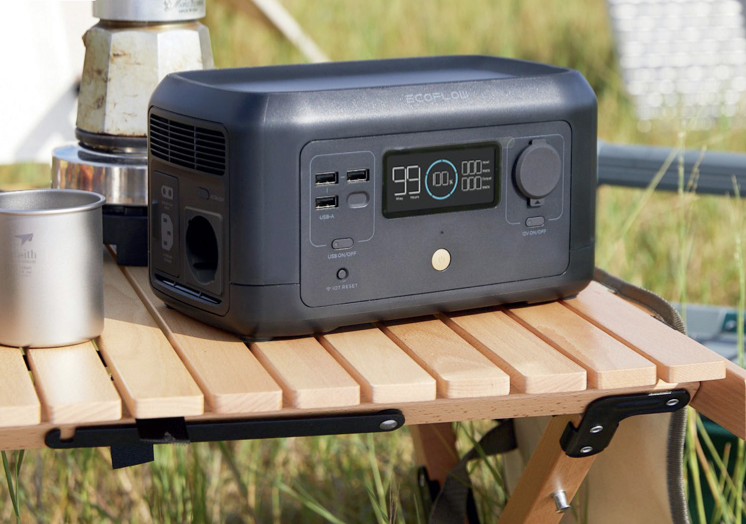
The portable power station brings electricity where there wasn't any before. It also serves as a backup power source in case of a power outage. It has enough power for quite a heavy use.
Text: Joni Nikkola PhotosManufacturer
Backup power sources are now standard equipment, especially on trips where access to electricity is not always guaranteed. They can charge cell phones, small tablets, and other small electronics with ease, but they barely provide enough power to charge laptops or use household appliances.
You can plug in the portable power station to, for example, a solar-powered cottage or collect some of the energy generated by the cottage’s solar panels during the day. It is also suitable for camping or, for example, using the laptop for work in the car. But it can also be useful at home in case of power outages.
In the spring of 2018, we tested a PS100 power bank the size of a half-liter soda bottle from Polaroid, which was equipped with a traditional power outlet. With it, the computer ran for two hours and 20 minutes in heavy use. This time, it’s a slightly larger EcoFlow River Mini Wireless.
There are two versions available, of which our trial model was the Wireless model. It costs 350 euros, and unlike the cheaper basic model, it offers a 100-watt USB-C connection and a wireless charging base.
In a bag or cargo area
The EcoFlow River Mini Wireless is quite compact in size, roughly the size of a six-pack can. It has three USB-A ports on the front panel, for charging mobile devices, and a more powerful USB-C port for faster charging. Underneath the ports is a power switch for the USB connectors. On the right side of the front panel is a 12-volt power socket and a switch for it.
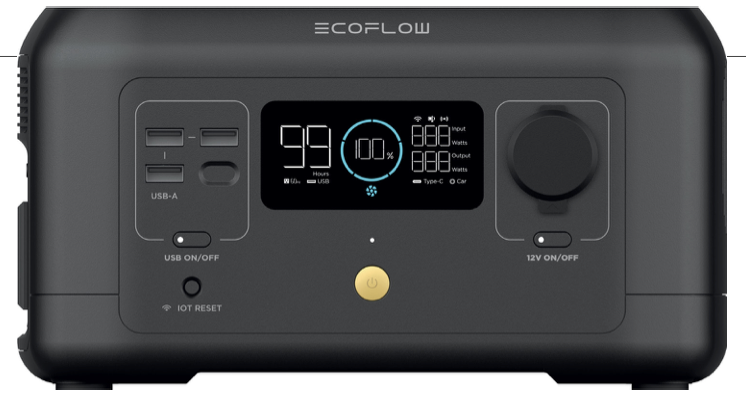
The front panel is versatile. From it you can check the charging status, the device’s charging power, and the power available for the outlets. To ensure safety, the device is equipped with high and low temperature protection, over-discharge protection, over-charge protection, overload protection, short-circuit protection, and overcurrent protection. The front panel’s indicator lights show you where the fault is at any given time, whether it’s affecting the device’s own charging, the car’s plug, USB plugs, or the Schuko plug.
In the center is a display. On the left side of it are large numbers showing the remaining charging level and charging time. The bell in the center and the percentage show the charging level as a percentage, and on the right are numbers showing the incoming power and the power output in watts. The smaller icons show the status of the wireless Wi-Fi network, the charging status, and which outlets are currently in use.
Below the display is an IOT Reset button that allows the device to be connected to a mobile app, as well as a power button. At the bottom is also a warning light for too low and too high temperatures, as well as for the fan jamming. On the left side of the device there are inputs for charging it using solar power and from the car’s plug or power outlet. There is also an AC power outlet and a switch for it. The package includes charging cables for the standard AC plug, for the car, and for solar charging.
Torque for most needs
The battery in the case has a 210 watt-hour capacity, which is about 58,400 milliamps. With that power, for example, the MacBook Air should charge three times, the Wi-Fi router should run for 15 hours, the refrigerator should operate for 1.5 hours, and the car’s cooler should keep food cold for 2.6 hours.
The device is promised to provide 300 watts of continuous power via the Schuko plug and 600 watts of instantaneous power. Through USB-A outputs, there is a voltage of five volts and a current of 2.4 amps. It does not, for example, offer any peak speed in mobile phone charging. The USB-C connector provides 100 watts of power, which already allows for a significantly faster charge.
Charging the EcoFlow River Mini Wireless is possible in three ways. With solar energy, the device should be fully charged in 2.6–5 hours, in a car in 3.5 hours, and from a wall outlet in 1.5 hours. Charging is fast considering the capacity; for example, the previously tested Polaroid mini power bank had to be left to charge overnight. When charging via a standard plug, the device reaches 80 percent charge in one hour.
In solar power and car charging, the maximum power is 100 watts. However, even with the Ecoflow’s own 110-watt solar panel, charging is still possible with a higher output. The car charging takes place from a cigarette lighter, and it is recommended only when the car is running. Charging from a power outlet is done with a maximum power of 300 watts.
The battery is promised to have a capacity of 80 percent after 500 charge cycles.
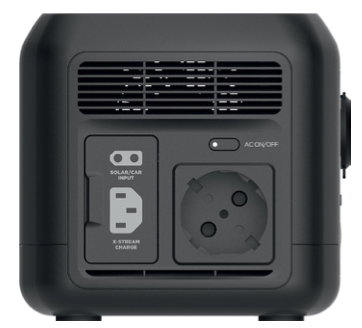
On the left side of the device is the input for charging it via solar power or the car's plug or power outlet. There is also an AC power outlet and its switch. On the opposite side is a fan.
The X-Boost function is designed for heating devices and devices with an electric motor, but not for devices with voltage protection, such as precision instruments.
EcoFlow also functions as an UPS device when connected to the power grid and then connected to another device. In normal circumstances, EcoFlow feeds the power it receives from the power grid to the device connected to it, but in the event of a power outage, it is able to switch on power within 30 milliseconds to provide electricity using its own battery. This does not match devices intended for demanding use, which require zero millisecond delays.
Convenient to use
Using the device is simple. With a short press, the power is turned on, and with a long press it is turned off. To use USB devices or the car plug, you have to press the corresponding buttons. Then the device does not automatically turn off. The Schuko plug also has to be turned on with a button, but it automatically turns off. The manufacturer also recommends turning off the AC adapter whenever it is not in use, as the inverter consumes electricity.
The device automatically enters sleep mode after five minutes of inactivity, at which point the display also goes off unless the device is currently charging. If you want to turn off the display for charging, you can do so with a short press of the power button. By default, the device goes completely off after 30 minutes of inactivity, but this can be adjusted from within the app.
The fan noise is surprisingly loud, and it’s on surprisingly much of the time, for example when charging a single cell phone and also when the EcoFlow River Mini Wireless itself is charging. It can be annoying in a small space or, for example, when used at night.
The phone charged in about 2.5 hours, during which the device’s charge dropped from full to 87 percent. So about ten charging cycles a month sounds realistic, depending on the battery capacity. The MacBook Air, on the other hand, took about the same amount of time, but the percentage dropped from 87 percent to 34 percent. Then again, even a 500-watt power tool ran without a hitch, although it’s best to avoid heavy and prolonged use.
The device comes with the EcoFlow app that can be downloaded. It allows you to monitor the power output of the various outlets, update the firmware, connect USB, car, and Schuko plugs, and adjust things like the sleep mode switch or the time between screen on and off. The app worked in all respects, but in our test it repeatedly disconnected from the device. Restarting the app started it working again.
Most read today

Latest
Subscribe to the newsletter
Subscribe to our newsletter and stay up to date with the latest news in technology and entertainment electronics.
Survey
Quiz
Nokia phones
Related Posts

IFA 2026 – these were the most interesting AV and technology innovations from Berlin
The Berlin IFA 2026 was not built around a single major announcement. TVs with RGB backlighting are making a strong entrance, soundbars are growing into full multi-channel systems, and projectors...

One display, many uses: This is how digital entertainment has changed
Nowadays, you can switch from Netflix to a video call, a mobile game, or the news of the day on the same device in just a few minutes. Technological progress has not only changed devices,...

Fundraising starts with a good plan – this is how a joint campaign stays under control
A class trip, a camp school, a tournament trip, equipment, an event, or any other purchase can create a need to raise money as a group. Well-planned fundraising helps cover...

In the test: Huion Note X10 Digital Notebook – Paper notes conveniently converted to digital
The Huion Note X10 combines a regular sheet of paper and digital storage. Notes are written on the paper with a pen, and the movements of the pen are recorded on the device as well...
In the experiment, ProCaster S3 compact active multi-function speakers
Small speakers equipped with a built-in amplifier are a practical solution when you want the simplest speaker solution possible next to a computer, TV, or other audio source....
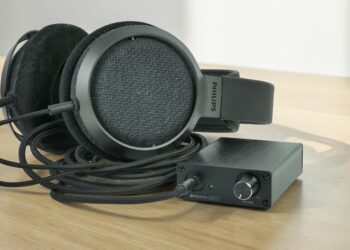
TRYING: Better sound from a computer at an affordable price – ProCaster AMP-H1 DA converter/headphone amplifier
The computer's own headphone output is usually sufficient for basic use – if not for that either. Especially on laptops, the audio output is often implemented only as part of the audio circuitry,...
 Suomi
Suomi  English