
In the experiment, Xiaodu Du Smart Buds Pro headphones: The tongue guard is worth every penny

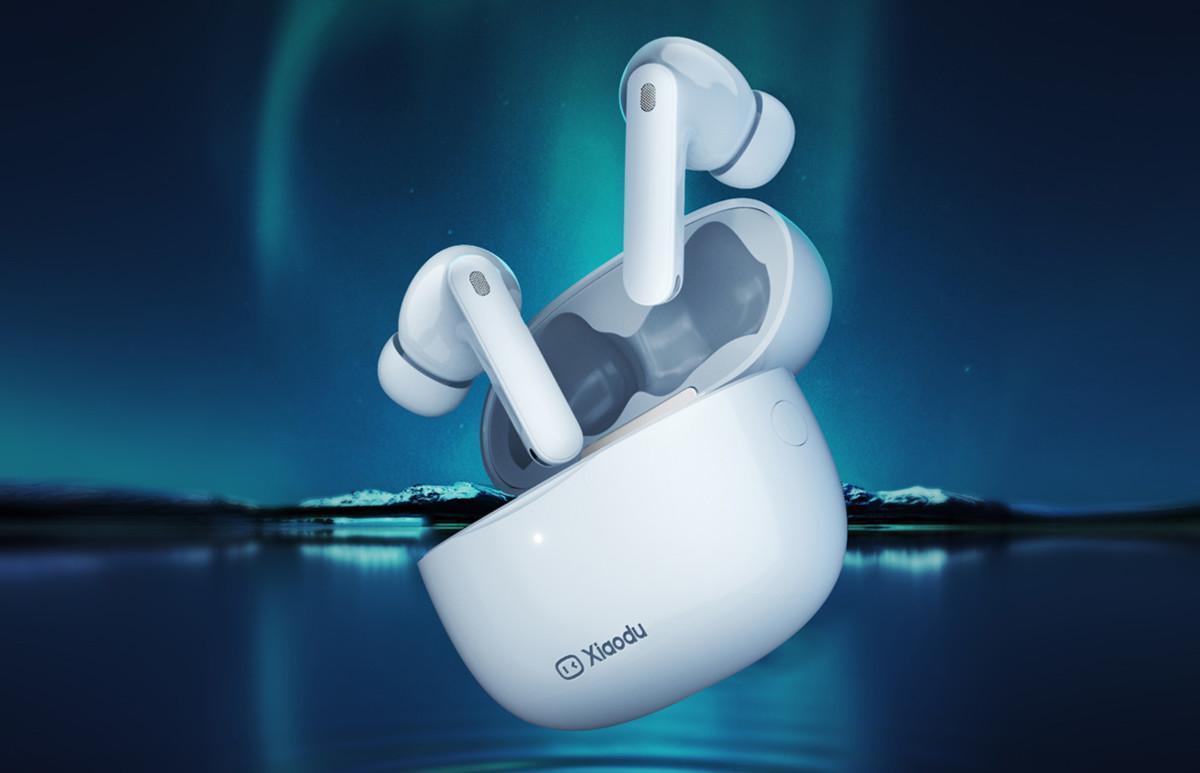
The Chinese voice search device Xiaodu headphones can understand more than 40 languages, including Finnish. And they even work.
Text and screenshots: Joni Nikkola
Photos: Manufacturer
The Xiaodu Du Smart Buds Pro headphones from China recently arrived on the Finnish market. The Xiaodu brand is backed by Baidu, the so-called Chinese Google, which, like its Western counterpart, expanded its search engine business into smart devices in 2018.
The Du Smart Buds Pro headphones are not just a pair of headphones; they also feature active noise cancellation. Of course, they are also suitable for listening to music or, for example, podcasts, as well as making and receiving calls.
First impressions and characteristics
The design wasn’t in vain to reinvent the wheel, because the Xiaodu Du Smart Buds Pro looks significantly different from Apple’s headphones. The earcups, however, are shorter than on Apple’s headphones, and unlike the apple product, they are attached to the ear canal using ear tips. There are four sizes available, so there is a suitable option for pretty much everyone.
As is typical for wireless headphones, there is a charging dock included that allows you to charge the headphones’ batteries even when there is no power source available. With wireless earbuds, it’s difficult to get a very large battery. The battery life is promised to be a total of up to 35 hours. With the headphones’ own batteries, the battery life should be enough for seven hours, which is quite a good achievement.
The headphones automatically cut off the playback when you remove them from your ears. For sports and outdoor use, the headphones have IPX4 protection that protects against water, dust, and moisture.
There is an active noise cancellation function that is said to reduce ambient noise by 40 decibels. There is also a noise cancellation function for improving the microphone sound, and the headphones have a transparency mode where ambient noise is heard through the microphones. For gaming, there is a game mode where the latency is lower. When testing it while watching a video, lip sync was roughly okay, while in normal mode the lips moved with the audio at a slightly irregular pace.

App
The Xiaodu app offers quite a comprehensive set of features. One of them is the ability to record phone calls, which is a welcome addition for, for example, journalists. It also works with WhatsApp or Messenger calls. In recent Android versions, this feature is not even available by default with third-party apps. When testing, the phone call sound was clear on both sides.
The app also allows you to take notes by typing text. It seems to work quite well as long as you enunciate correctly. Unfortunately, the language options are only English, Chinese, and Japanese. On the other hand, the same functionality is available in Google Docs, for example.
The playback profile for headphones can be customized for each user using a hearing test. The app plays back sounds at different frequencies and a button is pressed when the sound starts to be heard.
In addition, there is of course a translation function that is available in the dialog mode and as simultaneous interpretation. In the simultaneous mode, the source language and target language are selected, after which the application translates the speech.
In the dialog mode, you first select the languages used by both parties. During the conversation, you need to figure out how to press on the bottom of the app to see which one is speaking at the moment, so that the app knows which language is being spoken at that moment. You should familiarize yourself with the operation carefully before actually using it, as it requires some getting used to.
The opposing party’s words are translated into the user’s language in the headphones and on the phone screen, and are also displayed in the source language. The opponent’s own words, in turn, are displayed in the app in both the opponent’s and the user’s language, allowing them to be shown to the conversation partner.
The interaction is not entirely straightforward; sometimes the app takes quite a long time to translate before you can start speaking. Both parties are therefore required to be patient while waiting for the button to be pressed, the brief moment after that before starting the conversation, and the actual translation. The other party also needs to be able to understand how to proceed – whether it is in a common language or not. The parties in the dialogue are also required to stick to the most common language as closely as possible, and to speak in the most concise possible way.
Most read today

Latest
Subscribe to the newsletter
Subscribe to our newsletter and stay up to date with the latest news in technology and entertainment electronics.
Survey
Quiz
Nokia phones
Related Posts
Cayin Jazz 70 – genuine tube sound and style at a reasonable price
The tube amplifier doesn't need to cost several thousand euros. The new Jazz 70 from Cayin brings classic EL34 tube technology, visible tubes, analog meters, and hand-crafted controls...

The use of artificial intelligence in music is growing rapidly, but there is still a lot to be learned about its use – at least in Finland.
Artificial music evokes significantly more reservations in Finns than the use of artificial intelligence in general. Artificial intelligence is rapidly becoming a part of everyday life, but the output it produces...
The new arrival of CDs is also reflected in devices – the Argon Audio CD1 is a new CD player priced at 399 euros
The arrival of vinyl records has been ongoing for a long time, and now a similar trend is also evident in CD records. Argon Audio responds to this interest with the new CD1 player,...

Audio-Technica ATH-AL5NC combines an open design and wireless connectivity – battery life up to 75 hours
Audio-Technica expands its range of open headphones with the ATH-AL5NC model, which is the manufacturer's first wireless open headphone. In addition to Bluetooth connectivity, it also features LDAC, noise reduction, and sound leakage...
The Marantz MCR 60n combines CD, vinyl, streaming, and TV audio into one device
Marantz has introduced the new MCR 60 multi-functional device, which continues the manufacturer's long series of compact Melody systems. A web player, CD player, and...
TCL Z100 and Z100-SW FlexConnect speakers – Easily almost like a real home theater
Dolby Atmos FlexConnect promises to solve one of the eternal problems of multichannel sound: the speakers don't need to be exactly in the right positions. The TCL Z100 speakers can...
 Suomi
Suomi  English