
DSPeaker ShakeEQ Bass Distortion Pedal – Vibration control


The solution for many
The Finnish company DSPeaker is primarily known for its subwoofers and home theater systems, but now the manufacturer has noticed that the same technology works equally well in bass speakers, whose market, especially in the United States, is relatively large; and is also growing in Europe.
Instead of repairing the room distortion, this ShakeEQ digital signal processor costing about 300 euros is designed to repair the “vibration response” of bass speakers, while also acting as a controller unit with its level controls and filters.
The device is capable of analyzing the resonance created by the vibrator and mounting structure, and it is said to smooth out overly strong and extra resonances and strengthen weaker areas, thereby making the physical perception of the vibration behave more linearly and better match the original frequency and intensity content of the input signal. In theory, that is.
In addition, the device also features a manually adjustable parametric equalizer, adjustable low- and high-pass filters, level control (via remote control), delay control, and much more. Too much?

Connection
The compact-sized DSPeaker ShakeEQ is placed in the signal chain before the bass boost amplifier. In practice, it is connected to the audio source’s line-level outputs, and its two RCA inputs (A and B) are combined within the device to form a single signal that is fed to the bass boost amplifier via the two RCA outputs. If more amplifiers are used, the output can be expanded using RCA splitters.

In stereo use, the connection is made to the amplifier’s line output (if there is one) or, if necessary, to the speaker output using a line level adapter. In home theater use (with an AV amplifier), you can use the subbar output, but in this case too, the manufacturer recommends using the main channels (left/right) line outputs and setting the main speakers of the amplifier to the “large” setting, so that the signal includes the entire bass range. If this is not possible, for example due to a lack of amplifier connections, ShakeEQ can of course alternatively be connected to the subwoofer output (LFE), in which case the main speakers are set to the “small” mode. This ensures that the sub output transmits a wider frequency range than the LFE effects alone, and ShakeEQ receives a sufficiently versatile signal for frequency correction. This is the manufacturer’s recommendation.
Jatka artikkelin lukemista
Tämä artikkeli kuuluu AVPlus Extra -sisältöön. Jatka lukemista 1 krediitillä.
Login if you have purchased
Lukuoikeus artikkeliin
Tämän artikkelin lukeminen maksaa 1 krediitin. Lukuoikeus avaa artikkelin kokonaisuudessaan ja tallentaa sen käyttäjätilillesi. Alkaen 0,39 €Most read today

Latest
Subscribe to the newsletter
Subscribe to our newsletter and stay up to date with the latest news in technology and entertainment electronics.
Survey
Quiz
Nokia phones
Related Posts
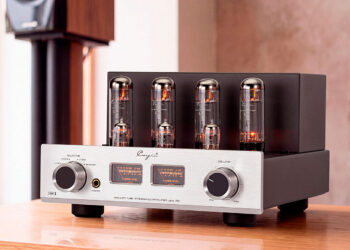
Cayin Jazz 70 – genuine tube sound and style at a reasonable price
The tube amplifier doesn't need to cost several thousand euros. The new Jazz 70 from Cayin brings classic EL34 tube technology, visible tubes, analog meters, and hand-crafted controls...

The use of artificial intelligence in music is growing rapidly, but there is still a lot to be learned about its use – at least in Finland.
Artificial music evokes significantly more reservations in Finns than the use of artificial intelligence in general. Artificial intelligence is rapidly becoming a part of everyday life, but the output it produces...
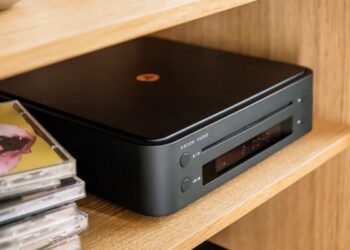
The new arrival of CDs is also reflected in devices – the Argon Audio CD1 is a new CD player priced at 399 euros
The arrival of vinyl records has been ongoing for a long time, and now a similar trend is also evident in CD records. Argon Audio responds to this interest with the new CD1 player,...
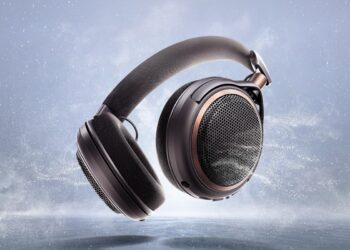
Audio-Technica ATH-AL5NC combines an open design and wireless connectivity – battery life up to 75 hours
Audio-Technica expands its range of open headphones with the ATH-AL5NC model, which is the manufacturer's first wireless open headphone. In addition to Bluetooth connectivity, it also features LDAC, noise reduction, and sound leakage...
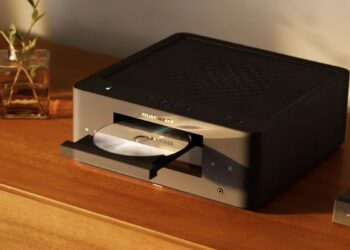
The Marantz MCR 60n combines CD, vinyl, streaming, and TV audio into one device
Marantz has introduced the new MCR 60 multi-functional device, which continues the manufacturer's long series of compact Melody systems. A web player, CD player, and...
IN THE TEST: TCL 65C7L – Bright Mini LED with Wide Color Reproduction
TCL has invested heavily in Mini LED TVs in recent years and has also brought high brightness, rich local contrast, and comprehensive gaming features to clearly...
 Suomi
Suomi  English